


Voice verification
Find out whether a recording uses a specific person's voice
We compare the recording in question with the voice samples you provide and assess how closely they match. The analysis helps establish whether the voice in the material may belong to the same person as the voice in the reference recordings — including cases where someone's voice may have been cloned or recreated with AI technology.
Verification fee: 70 EUR
Turnaround time: 48h
What can we check?
We verify the similarity between original recordings of a given person and material whose origin raises doubts.
We do not simply compare how the recordings sound by ear. We analyse digital voice characteristics such as timbre, articulation and the speaker profile stored as a mathematical pattern.
How does verification work?
- Reference recordings — you send us material containing the genuine voice of the person whose identity is to be checked.
- Recording under examination — the file that may contain that person's voice, including a generated or cloned voice.
- We split the recordings into short speech segments and the system compares the digital voice profiles stored in each file.
What do you receive?
Once the analysis is complete we prepare a report containing:
- an assessment of how closely the voices match
- the voice similarity score
- a comparison of the examined material with the reference recordings
- a description of the method applied
- clear charts and a summary of results
- a discussion of the analysis limitations
- the final conclusion
Result scale
The result can be presented in one of five categories:
- no significant match
- weak match
- moderate match
- strong match
- very strong match
How to read the result
A very strong match means the digital voice profile in the examined material is very close to the voice profile from the reference recordings.
This does not prove, however, that an AI model was built from exactly the samples provided — other recordings of the same person may have been used.
The analysis answers the question:
Does the examined material contain a voice consistent with a specific person's voice?
It does not give a definitive answer to:
Which files exactly were used to build the voice model?
Will the analysis confirm the use of AI?
Not in every case.
If a recording sounds unnatural and at the same time shows a strong match with a specific person's voice, this may indicate voice synthesis or cloning. A voice match alone is not proof that the recording was generated by AI.
A natural recording of the same person should also show high similarity. The result therefore needs to be assessed together with audio quality, how the material was produced and any other available information.
What recordings do we need?
- at least two reliable reference recordings
- recordings without music or loud effects
- material containing as much clean speech as possible
- the examined file in the highest available quality
The longer and cleaner the samples, the more material we can use for comparison. Short, noisy or heavily processed recordings may reduce the reliability of the result.
Security of your material
We use the files you send solely to carry out the commissioned analysis. They are never used to create, train or develop voice models.
How the recordings are delivered, stored and deleted is agreed before the verification starts.
Important limitation
An RPM analytical report is not a court expert opinion and is not a forensic phonoscopic examination intended for use in court proceedings. The result should not be described as a “percentage probability that the recording was made by AI” — the correct term is the probability of voice identity consistency.
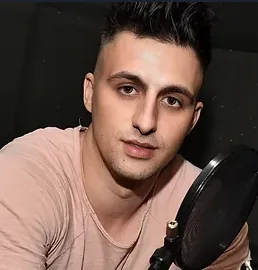
Piotr Zientara
sound engineering and voice verification expert
RPM Studio Wrocław — write or call directly about voice verification.